Advanced technology for safer and more precise spine surgery
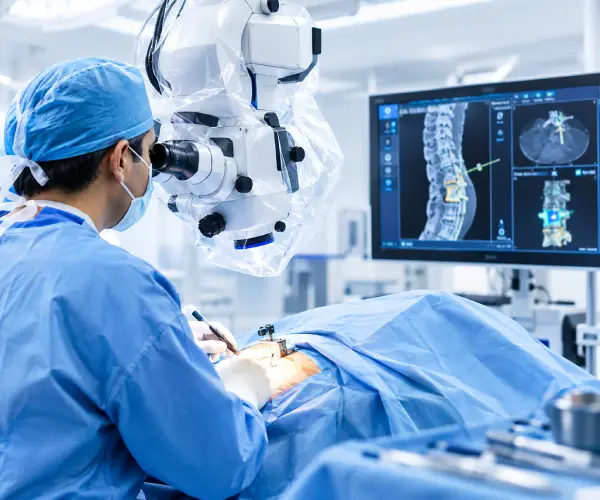
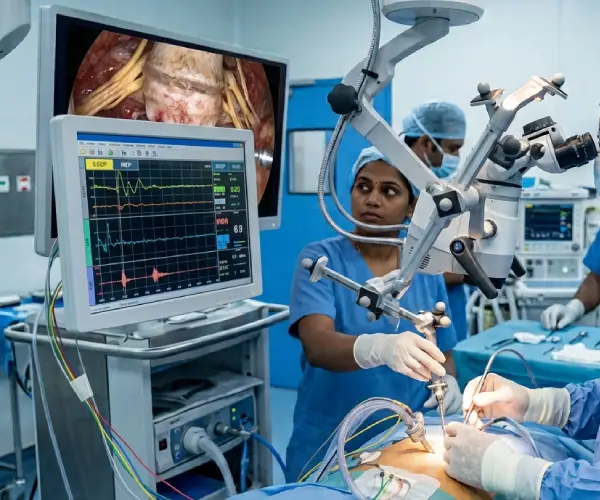
Spine surgery has changed a lot over the years. Today, advanced technology helps doctors understand the problem more clearly, plan the surgery carefully, and perform the procedure with greater precision. Depending on your condition, these technologies may help reduce the size of the surgical cut, protect nearby muscles and nerves, and support a smoother recovery.
What does modern spine surgery mean for you?
The goal of using modern technology is simple: to make spine surgery as safe and precise as possible while helping you return to your normal activities.
Technology 01
Seeing Better While Operating
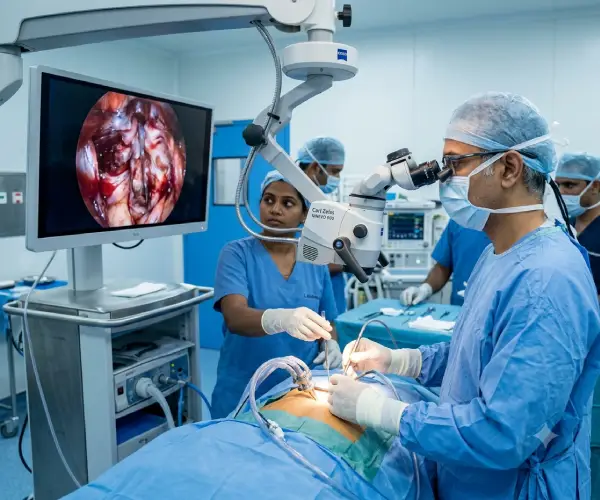
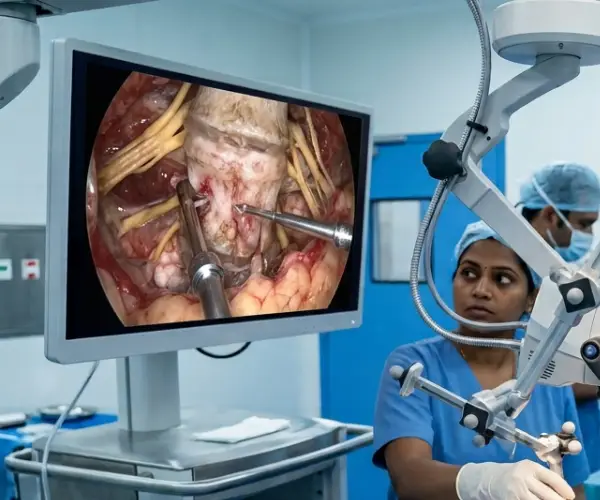
Special magnifying tools and cameras let the doctor see very clearly.
During surgery, the doctor uses special glasses, microscopes, and tiny cameras to zoom in and see every small part of your spine clearly — much more clearly than the naked eye ever could.
What this means for you:
Technology 02
Planning Surgery in 3D
A real, touchable model of your spine — not just a flat scan.
X-rays, CT and MRI scans give good pictures, but they’re still flat, on a screen. We can turn those scans into an actual 3D-printed model of your spine — something the doctor can hold, turn around, and study from every side. This is especially helpful for problems like a curved or twisted spine.
This allows:
Technology 03
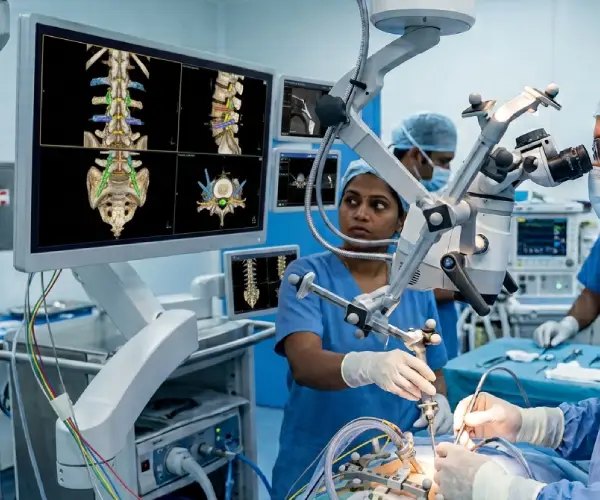
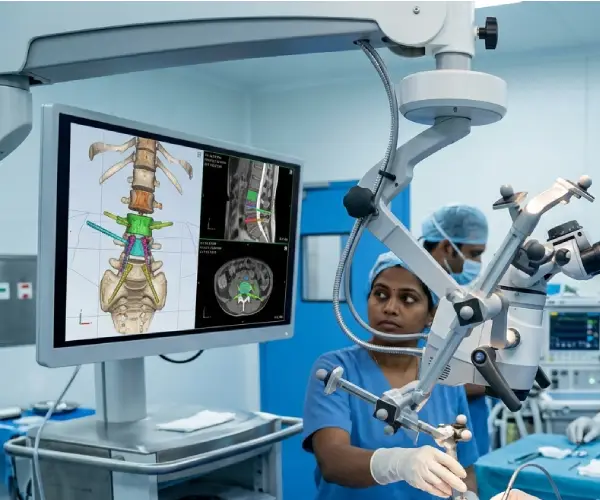
Guided Surgery — Like GPS for Your Spine
Think of it like Google Maps for surgery.
A navigation system tracks exactly where every instrument is inside your body in real time, and guides the doctor to place screws and implants in exactly the right spot — every single time.
Benefits:
Technology 04
Keeping Your Nerves Safe, Live
A live alarm system watching your nerves throughout surgery.
In longer, more complex surgeries — like straightening a curved spine or removing a tumour — protecting the nerves matters most. Earlier, doctors had to stop the surgery now and then just to check. Today, a live monitoring system watches the nerves the entire time, without ever pausing the operation.
This live monitoring:
Technology 05
A Tool That Cuts Bone, Not Nerves
A special tool that only cuts bone — nothing else.
One of the hardest parts of spine surgery is cutting bone that sits very close to nerves and the spinal cord. Older tools could sometimes injure the soft tissue around it. This newer tool uses sound waves that cut only bone — the nerves and soft tissue right next to it stay completely untouched.
Why this matters:
Safer, Faster,
Smarter Surgery
Modern spine surgery isn't just about fancy machines. It's about using the right tools to make your surgery safer, quicker, and give you a better outcome you can count on.
If a doctor has told you that you need spine surgery, it’s worth knowing exactly how it will be done. The right technology, in the hands of the right surgeon, makes all the difference.
Book a consultation and get a clear, simple treatment plan explained to you.
Understand your surgery before you have it
Every tool on this page exists for one simple reason — to make your surgery safer and give you a better recovery. Talk it through with Dr. Amandeep Gujral.