Dr Amandeep Gujral | Spine Care India
Discover expert healthcare solutions designed to support better care, visibility, and growth.
Read patient stories, explore our gallery, and stay updated with the latest blogs.
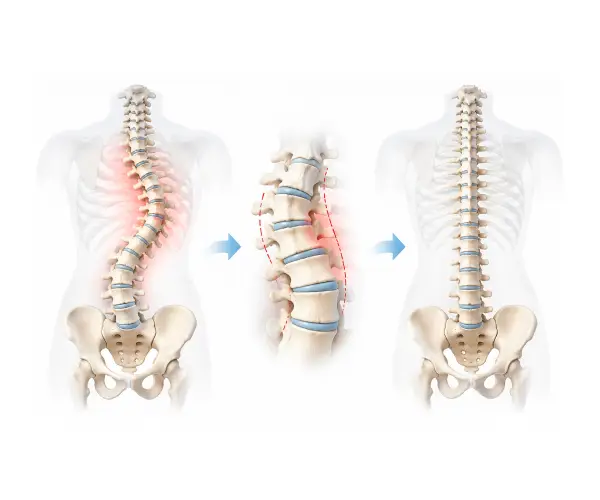
Scoliosis is an abnormal sideways curve of the spine. Some curves are mild and only need monitoring, while more significant deformities may affect posture, movement or daily life. Treatment depends on age, curve severity and symptoms.
Uneven shoulders, hips or a visibly curved spine
Physical examination and spine imaging
Observation, physiotherapy, bracing or surgery depending on severity
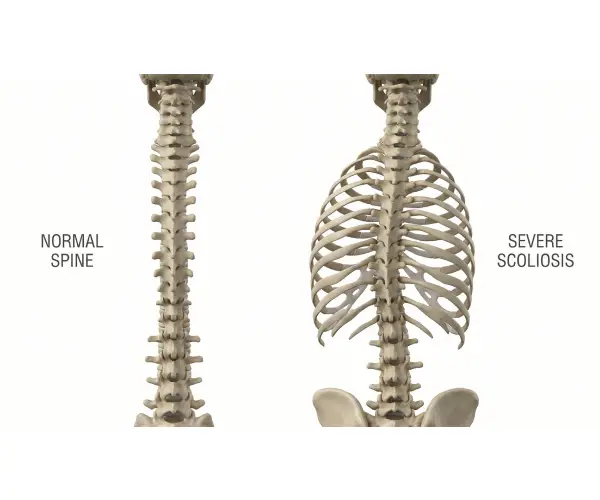
A healthy spine has natural curves when viewed from the side. Scoliosis is a sideways curve of the spine when viewed from the front or back.
The curve may be mild or more pronounced and can affect the alignment of the shoulders, hips and body.
One or more parts of the spine curve sideways.
The shoulders, hips or back may appear uneven.
Larger or complex curves can sometimes affect movement, balance or breathing.
You may notice:
More severe deformities may sometimes affect walking or breathing.
In some patients, the exact cause may not be identified.
The doctor checks posture, spine alignment, movement and neurological function.
Shows the size and location of the spinal curve.
May help understand how flexible the curve is.
May be advised for selected patients to assess the spinal cord, nerves or bone structure.
Depending on age and severity, treatment may include:
Surgery may be considered when:
Surgery is planned according to the type and severity of the deformity.
It may involve:
The exact surgical approach depends on the individual condition.
Movement is gradually introduced under medical guidance.
Physiotherapy may help restore strength and mobility.
Daily activities are gradually increased based on healing.
Regular follow-up helps monitor spinal alignment and recovery.
Not every person with scoliosis needs surgery.
A clearer picture of what a slip disc is, how microdiscectomy works, and what recovery actually looks like.
No. Many patients can be monitored or treated with non-surgical methods.
It can, particularly in some adults with degenerative or more significant spinal deformity.
Some curves can progress, especially certain adult degenerative curves. Regular assessment helps monitor changes.
Physiotherapy can help improve strength, movement and symptoms, but its role depends on the type and severity of the curve.
Surgery may be considered for severe, progressive or symptomatic deformities.
An early evaluation can help understand the type and severity of the spinal curve.