
Lumbar Slip Disc
- Lumbar Spine Condition
Lumbar Slip Disc (Herniated Disc)Treatment
A lumbar slip disc affects the lower back and can cause back pain, pain in the leg, numbness or tingling. The good news is that many people get better with medicines, rest and physiotherapy without needing surgery. When surgery is required, minimally invasive techniques can help relieve pressure on the nerve and support a quicker return to daily activities.
- Surgery only when needed
- Small keyhole incision
- Early walking after surgery
25–40
Most commonly affected age group
3–6 weeks
Typical healing time with rest & medication
24 hrs
Hospital stay for microdiscectomy
- Understanding the Condition
What happens in your Lower back
Your spine is made up of small bones called vertebrae. Between these bones are soft discs that act like cushions and help your back move comfortably.
The lower part of your spine is called the lumbar spine. It carries much of your body’s weight and is involved in everyday movements such as sitting, standing, bending and walking.
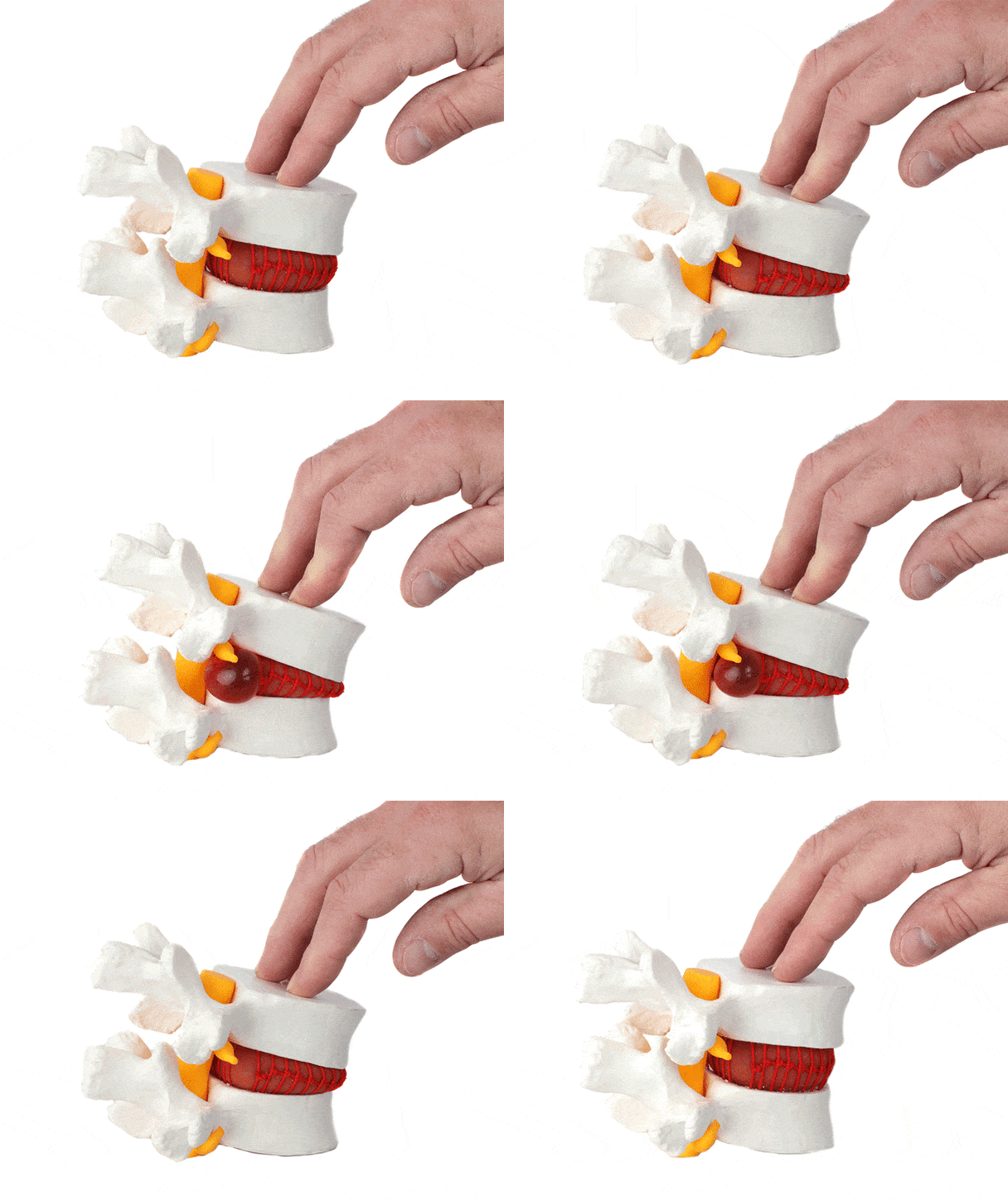
Over time, or because of an injury or sudden strain, one of these discs can become damaged or bulge out. If it presses on a nearby nerve, it can cause pain or other symptoms in the back and leg.
- The Mechanism
What is a lumbar slip disc?
A lumbar slip disc, also called a herniated disc, happens when one of the discs in the lower back becomes damaged and pushes out of its normal position.
1
The outer part of the disc becomes weak
The tough outer layer of the disc can develop a small tear or become weak.
2
The inner part pushes outward
The softer inner portion of the disc can push through the weakened area.
3
The nearby nerve may get pressed
If the disc presses against a spinal nerve, it can cause pain, tingling, numbness or weakness in the leg. This nerve-related pain is commonly known as sciatica.
- Symptoms
Signs of a lumbar slip disc
Symptoms can be different from person to person. You may experience:
- Pain in the lower back
- Pain spreading from the back or buttock into the leg
- Tingling or numbness in the leg or foot
- Weakness in the leg or foot
- Muscle stiffness or spasms
- Pain that becomes worse when coughing, sneezing or sitting for long periods
- Difficulty walking because of pain
Seek care urgently
If you suddenly have difficulty controlling your bladder or bowel, or experience rapidly increasing weakness in your legs, seek medical attention immediately. These symptoms can sometimes indicate severe pressure on the nerves and should not be ignored.
Important: Back and leg pain can have several causes. A proper examination and, when required, an MRI help identify the actual cause.
- Causes & Risk Factors
Why Does a Slip Disc Happen?
Most common cause
Age-Related Changes
As we get older, the discs in the spine can gradually lose water and become less flexible. This can make them more likely to develop small tears or bulges.
Sudden onset
Sudden Injury or Strain
A slip disc can also happen after:
- Lifting something heavy
- A sudden twisting movement
- A fall or accident
- A sports-related injury
25–40
years — most affected
Who May Be More at Risk?
The risk can be higher in people who:
Sit for long hours
Have poor posture
Are overweight
Do heavy physical work
Suddenly perform strenuous activities without preparation
Have a history of back problems
- Tests & Diagnosis
Confirming a Lumbar Disc Problem
A doctor will first understand your symptoms and examine your back, legs and nerve function. Depending on your symptoms, some tests may be recommended.
MRI (Magnetic Resonance Imaging)
An MRI gives a detailed view of the discs, nerves and other structures in the spine. It can help show whether a disc is pressing on a nerve.
EMG / Nerve Test
In some cases, an EMG test may be advised to check how well the nerves are working and understand where the problem may be coming from.
Not every patient needs every test. The right investigations depend on your symptoms and clinical examination.
- Treatments
Treatment for Lumbar Slip Disc
First Step
Non-Surgical Treatment
Most patients do not need surgery.
Treatment may include:
- Short-term, controlled rest
- Medicines to reduce pain and inflammation
- Medicines to relax tight muscles when required
- Physiotherapy and specific exercises
- Nerve or epidural injections in selected cases
Once the pain starts improving, gradually returning to normal activities and strengthening the back and core muscles can help support recovery.
If needed
When Is Surgery Considered?
Surgery is not usually the first option.
It may be considered when:
- Pain continues despite appropriate treatment
- Symptoms are severe or getting worse
- There is significant pressure on a nerve
- There is weakness or increasing numbness in the leg
- There are problems with bladder or bowel control
The decision to operate depends on your symptoms, examination, MRI findings and response to other treatments.
- The Procedure
Microdiscectomy – Minimally Invasive Surgery
A microdiscectomy is a minimally invasive procedure used when a slipped disc is pressing on a nerve and causing significant symptoms.
Through a small opening, the surgeon carefully reaches the affected area and removes only the part of the disc that is pressing on the nerve.
The aim is to free the nerve and reduce the pain caused by the pressure.
The procedure can be performed using a microscope and specialised instruments or through an endoscopic technique, depending on the patient’s condition.
What Can Recovery Look Like?
Within a Few Hours
Patients are generally encouraged to get up and walk after surgery rather than remain on prolonged bed rest.
Within 24 Hours
Many microdiscectomy procedures are performed as day-care or short-stay procedures, depending on the patient's condition and recovery.
First Few Days
The surgical wound needs to be kept clean and dry while it heals. Your doctor will provide specific wound-care instructions.
First 3–6 Weeks
You may be advised to avoid activities such as deep forward bending, sitting on the floor and lifting heavy weights. Walking and gradually returning to normal daily activities are generally encouraged as advised by your doctor.
Long Term
Regular exercises that strengthen your core and back can help support your spine and reduce the risk of future problems.
- The Outlook
A Lumbar Slip Disc Can Be Treated
A slip disc can be painful and uncomfortable, but it does not always mean surgery.
With the right diagnosis and treatment plan:
Many patients improve without surgery
Physiotherapy and lifestyle changes can support recovery
Surgery can be considered when symptoms are severe or persistent
Minimally invasive procedures may be an option for selected patients
- Videos & Photos
See the procedure and hear from
patients
A clearer picture of what a slip disc is, how microdiscectomy works, and what recovery actually looks like.

- Patient FAQs
Questions patients ask most
When surgery is required, a microdiscectomy may be recommended for suitable patients. It is a minimally invasive procedure in which the portion of the disc pressing on the nerve is removed.
Microdiscectomy is often performed as a day-care or short-stay procedure. The exact duration depends on your condition and recovery after surgery.
Usually, prolonged bed rest is not required. Patients are generally encouraged to start walking soon after surgery, as advised by the treating doctor.
Only the portion of the disc that is pressing on the nerve is removed. The remaining disc is left in place.
Your doctor may advise you to temporarily avoid heavy lifting, deep forward bending and sitting on the floor. Walking and gradually returning to normal activities are generally encouraged.
There is a possibility of recurrence after treatment. Maintaining a healthy weight, strengthening your core and following your doctor's activity advice can help protect your back.
Most patients can gradually return to their normal daily activities after recovery. The timeline varies depending on the individual, the procedure and the nature of their work.
No. Many patients improve with non-surgical treatment. Surgery is considered when symptoms are persistent, severe, or when there is significant nerve compression or neurological weakness.
Still Experiencing Back or Leg Pain?
Persistent back pain or pain travelling down your leg should not be ignored. Get a proper diagnosis and understand your treatment options before deciding on surgery.
- Bring your existing MRI or X-ray reports if available
- Get your symptoms evaluated by a spine specialist
- Consult at Dr. Gujral's Mumbai locations
- Related Conditions