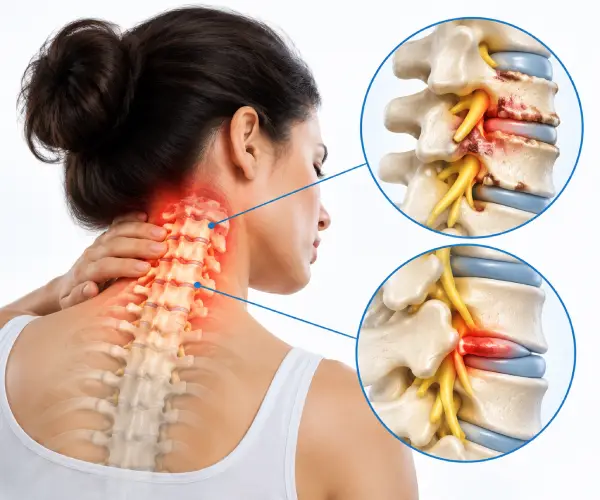
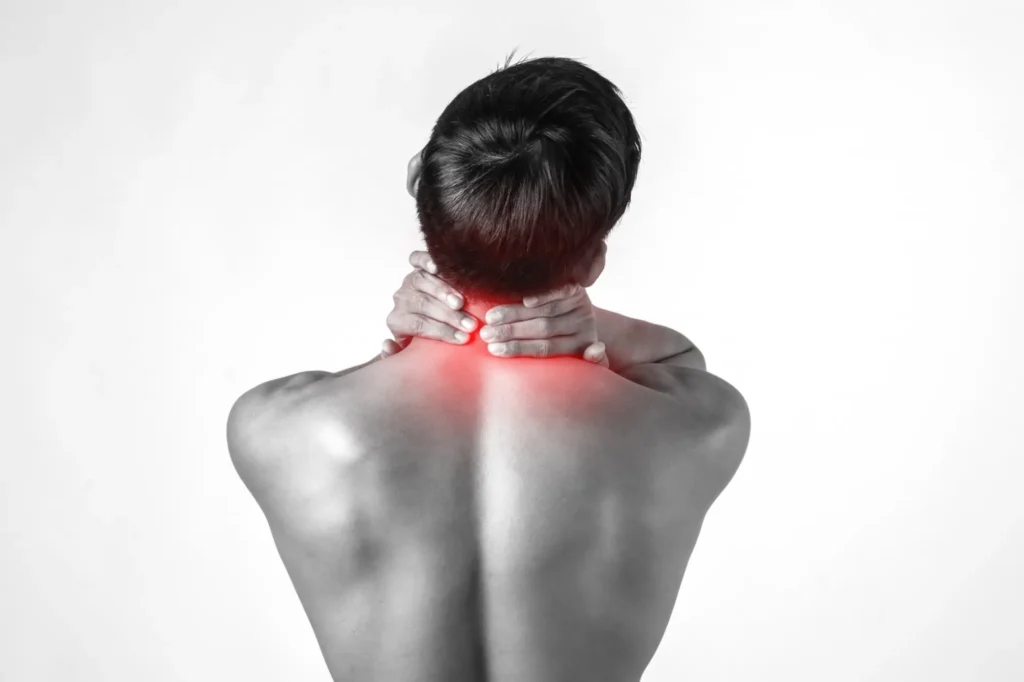
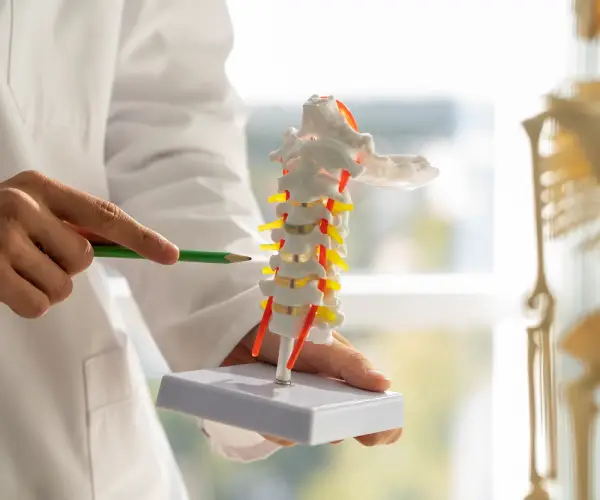
Neck pain, stiffness, headaches or pain travelling into the arm can sometimes be caused by cervical spondylosis or a cervical slip disc. These conditions can affect the discs, joints and nerves in the neck. Treatment depends on your symptoms and the amount of nerve or spinal cord pressure.
Treatment based on your symptoms
Non-surgical care whenever suitable
Surgery when nerve or spinal cord pressure requires it
The cervical spine is the upper part of your spine that supports your head and allows your neck to move.
Between the vertebrae are discs that act as cushions. Over time, these discs and the small joints in the neck can develop wear and tear.
Sometimes a disc can bulge or herniate and press on a nearby nerve.
The Mechanism
What Is Cervical Spondylosis?
Cervical spondylosis refers to age-related changes in the neck.
1
Discs and joints change
The discs can lose height and flexibility over time.
2
A disc may bulge
A damaged disc can push beyond its normal position and cause a cervical slip disc.
3
Nerves or spinal cord may be compressed
Pressure can cause pain, numbness, weakness or difficulty with hand movements.
Symptoms
Signs of a Cervical Spine Problem
You may experience:
Neck pain or stiffness
Shoulder pain
Pain travelling from the neck into the arm
Tingling or numbness in the hand
Weak grip
Arm weakness
Headaches associated with neck pain
Difficulty with fine hand movements
Difficulty walking in more advanced cases
If there is sudden or worsening weakness, severe numbness or difficulty with walking, medical evaluation should not be delayed.
Causes & Risk Factors
Why Do Cervical Problems Happen?
Most common cause
Common factors include:
Age-related wear and tear
Long hours on laptops or mobile phones
Poor sitting posture
Prolonged desk work
Disc degeneration
25–40
years — most affected
Who May Be More at Risk?
People who spend long hours sitting, use screens for extended periods or regularly maintain poor neck posture may experience more neck strain.
Tests & Diagnosis
Confirming a Cervical Spine Problem
Your doctor will assess your neck movement, strength, sensation and reflexes.
MRI (Magnetic Resonance Imaging) Scan
Shows the discs, nerves and spinal cord and helps identify compression.
X-Ray
Can show alignment and age-related changes in the cervical spine.
EMG / Nerve Test
May be recommended in selected cases to assess nerve function.
Treatments
Treatment for Cervical Spondylosis & Cervical Slip Disc
First Step
Non-Surgical Treatment
Treatment may include:
Short-term rest
Pain-relieving medicines
Anti-inflammatory medicines
Muscle relaxants when required
Physiotherapy
Neck and posture exercises
Ergonomic changes
Activity modification
Many patients can improve with non-surgical treatment.
If needed
When Is Surgery Considered?
Surgery may be considered when:
Pain remains severe or persistent
Nerve symptoms continue or worsen
There is significant weakness
The spinal cord is compressed
Symptoms do not improve with appropriate treatment
The Procedure
Cervical Spine Surgery
Depending on the condition, surgery may involve:
ACDF
The damaged disc is removed and the affected level is stabilized.
Cervical Disc Replacement
In selected patients, the damaged disc may be replaced with an artificial disc.
Decompression
Bone or disc material causing pressure on the nerve or spinal cord may be removed.The appropriate procedure depends on the level, cause and severity of compression.
What Can Recovery Look Like?
Early Recovery
Movement and walking are generally encouraged as advised.
First Few Weeks
Activities are gradually increased according to recovery.
Physiotherapy
Specific exercises may help restore neck, shoulder and upper-body strength.
Long Term
Good posture, regular movement and ergonomic habits can help reduce strain on the neck.
The Outlook
Neck Problems Can Be Managed
Cervical spondylosis or a cervical slip disc does not automatically mean surgery.
Many patients improve with non-surgical care
Posture and exercise can support recovery
Treatment depends on nerve and spinal cord involvement
Surgery is considered when necessary
Videos & Photos
See the procedure and hear from patients
A clearer picture of what a slip disc is, how microdiscectomy works, and what recovery actually looks like.
Patient FAQs
Questions patients ask most
Is cervical spondylosis curable?
Age-related changes cannot always be reversed, but symptoms can often be managed with appropriate treatment.
Can neck pain cause arm pain?
Yes. If a cervical nerve is compressed, pain can travel from the neck into the shoulder, arm or hand.
Will I always need surgery?
No. Many patients improve with medicines, physiotherapy, posture correction and activity changes.
When should I see a spine specialist?
Persistent neck pain, arm numbness, weakness, loss of grip or walking difficulty should be evaluated.
Can I use a laptop or mobile after treatment?
Yes, but maintaining proper posture and taking regular breaks is important.
Still Experiencing Neck or Arm Pain?
Get your symptoms evaluated and understand the cause before choosing treatment.