Osteoporosis can make the bones of the spine weak and more likely to fracture. A vertebral fracture may happen after a small fall, sudden movement or sometimes without a clear injury. Early diagnosis can help manage pain and protect the spine.
Early diagnosis and fracture assessment
Non-surgical care when suitable
Minimally invasive treatment for selected fractures
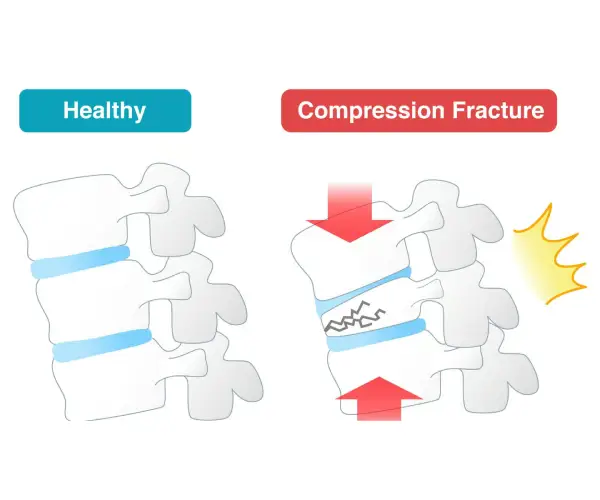
Healthy bones are strong and able to support the body. Osteoporosis reduces bone strength and makes bones more fragile.
When a weakened vertebra collapses, it is called a vertebral compression fracture.
The Mechanism
How Does an Osteoporotic Fracture Happen?
1
Bone becomes weaker
eoporosis reduces the strength and density of the bone.
2
The vertebra becomes fragile
The weakened spinal bone may not tolerate normal stress as well as a healthy bone.
3
The vertebra can collapse
A small fall, sudden movement or even normal activity may sometimes cause a compression fracture.
Symptoms
Signs of a lumbar slip disc
You may experience:
Sudden back pain
Pain after a small fall or movement
Pain after a small fall or movement
Pain that worsens with movement
Reduced height over time
A stooped posture
Difficulty with normal activities
Severe pain, weakness, numbness or difficulty walking should be evaluated promptly.
Causes & Risk Factors
Why Do These Fractures Happen?
The main underlying factor is weakened bone. Risk can increase with:
25–40
years — most affected
Risk can increase with:
Increasing age
Osteoporosis
Post-menopausal bone loss
Long-term steroid use
Certain medical conditions
Previous fractures
Previous fractures
Tests & Diagnosis
Confirming a Spine Fracture
X-Ray
Shows changes in the shape and height of the vertebra.
MRI Scan
Helps identify recent fractures and assess nearby nerves and soft tissues.
Bone Density Test
A DEXA scan may be recommended to assess bone strength and osteoporosis.
Additional tests may be advised depending on your condition.
Treatments
Treatment for Lumbar Slip Disc
First Step
Non-Surgical Treatment
Many fractures can be treated without surgery.
Treatment may include:
Pain medicines
Temporary spinal support
Activity modification
Physiotherapy when appropriate
Treatment for osteoporosis
Calcium and vitamin D when advised
Fall-prevention measures
If needed
When Is Surgery Considered?
A procedure may be considered when pain remains severe, the fracture does not settle with conservative care, or there is instability or nerve compression.
The Procedure
Vertebroplasty & Kyphoplasty
These are minimally invasive procedures used for selected vertebral compression fractures.
Vertebroplasty
A medical cement is placed inside the weakened vertebra to help stabilize it.
Kyphoplasty
A small balloon may first be used inside the vertebra before cement is placed.
The suitable procedure depends on the fracture and the patient’s overall condition.
What Can Recovery Look Like?
Early Recovery
Movement is gradually resumed according to the doctor's advice.
First Few Weeks
Avoid heavy lifting, sudden movements and activities that put excessive pressure on the spine.
Bone Health
Treating the underlying osteoporosis is important to reduce the risk of future fractures.
Long Term
Regular follow-up, appropriate exercise and fall prevention can support spine and bone health.
The Outlook
Spine Fractures Can Be Managed
Treatment is not only about relieving pain. The underlying bone weakness also needs attention.
Pain can often be managed with appropriate treatment
Selected fractures may benefit from minimally invasive procedures
Osteoporosis treatment helps protect future bone health
Recovery depends on the fracture and overall health
Videos & Photos
See the procedure and hear from patients
A clearer picture of what a slip disc is, how microdiscectomy works, and what recovery actually looks like.
Patient FAQs
Questions patients ask most
Can an osteoporotic spine fracture heal without surgery?
Yes. Many fractures are managed with medicines, support, activity modification and osteoporosis treatment.
Can a small fall cause a spine fracture?
Yes. When bones are severely weakened, even a minor fall or movement can sometimes cause a fracture.
What is vertebroplasty?
It is a minimally invasive procedure in which medical cement is placed inside a weakened vertebra.
What is kyphoplasty?
It is a procedure in which a small balloon may be used before cement is placed into the fractured vertebra.
Can another fracture happen?
Yes, particularly if the underlying osteoporosis is not treated.
Sudden Back Pain After a Small Fall?
Do not ignore persistent back pain, especially if you have osteoporosis or fragile bones.